
ChatGPT just picked your competitor for you
Yesterday I asked ChatGPT for the top 5 standing desks, shopping mode on.
It handed me FlexiSpot E7 Pro 48” as the “Best overall.” Standard recommendation.
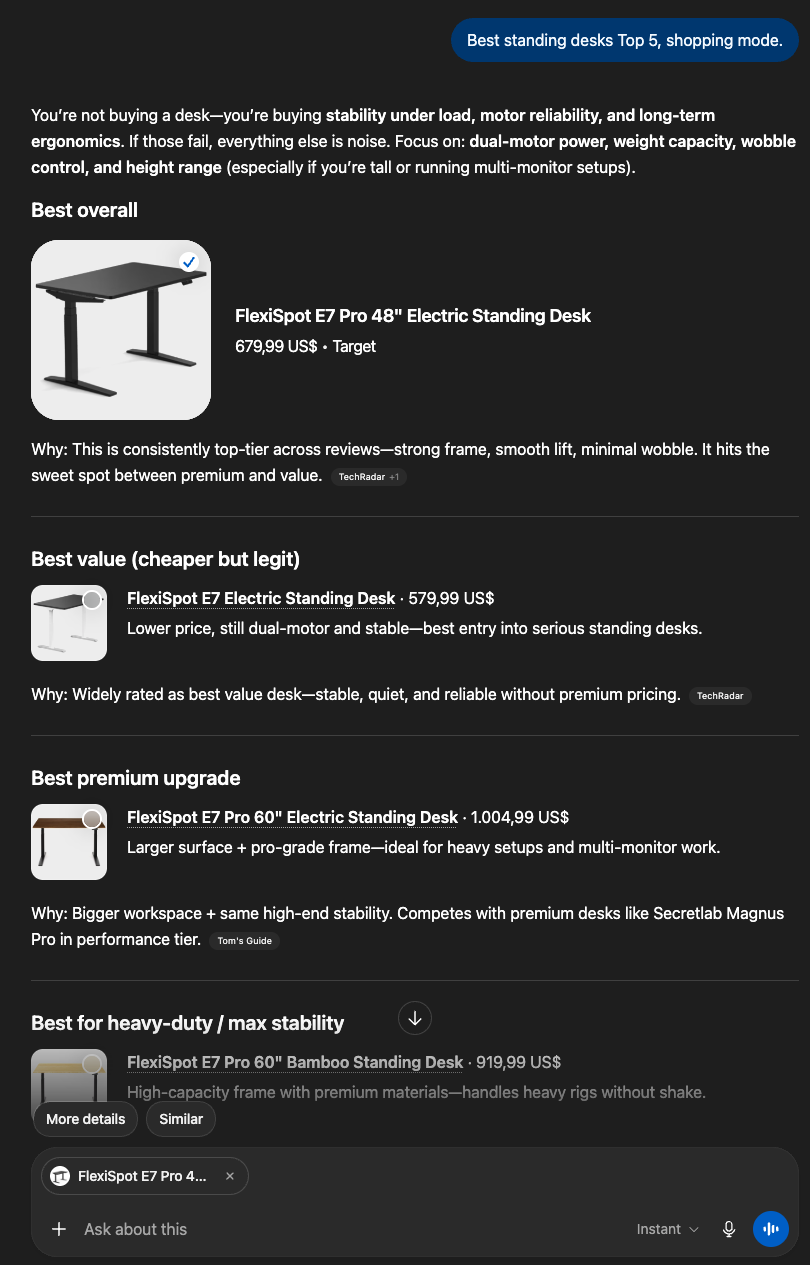
Then it did something I haven’t seen another channel do.
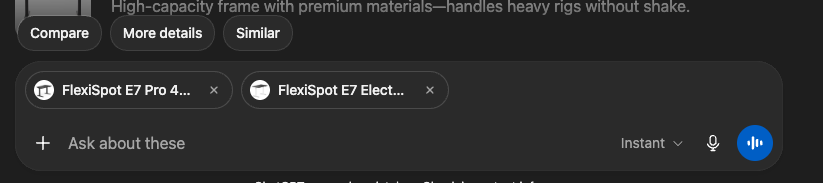
It let me tick two products from the result. Compare button appeared.
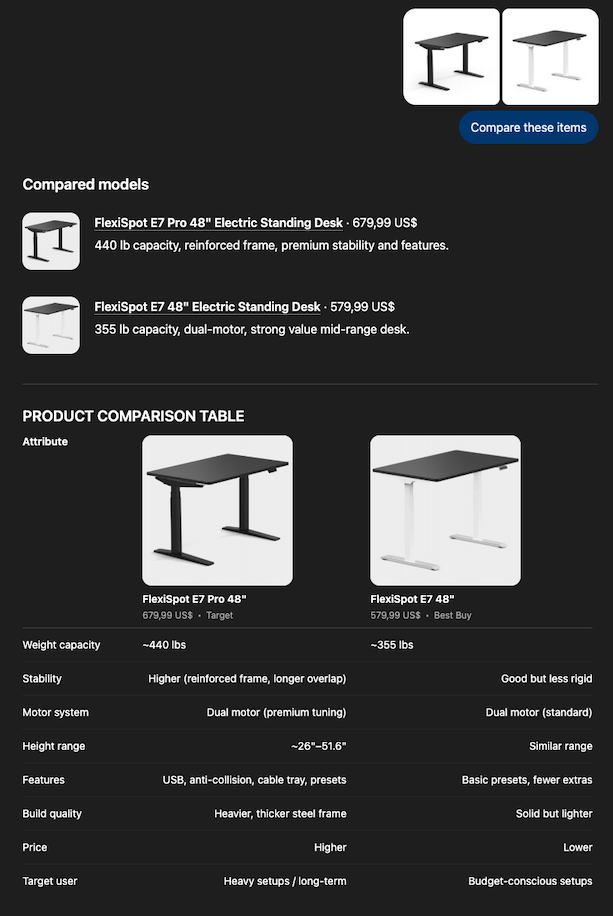
ChatGPT generated a side-by-side: weight capacity, frame, motor, height range, build quality, target user. Bottom line verdict. A “Pressure test” section that pre-rebutted my likely objections before I could raise them.
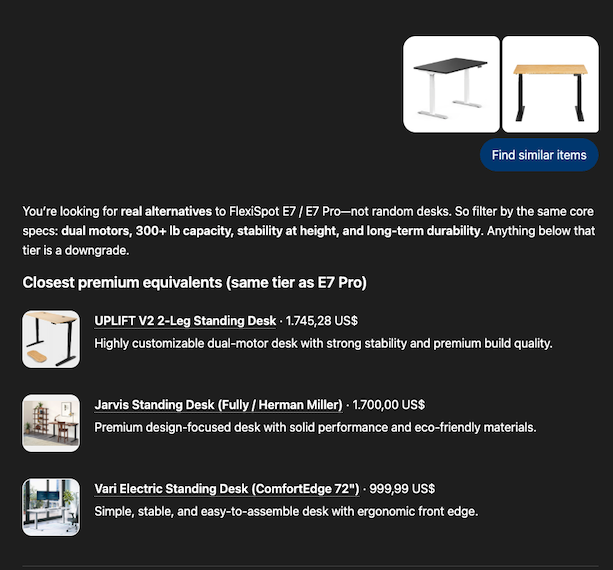
Then it surfaced “Closed premium equivalents”. Uplift V2 and Jarvis, without me asking.
Stop and notice what just happened.
In Google Ads, you compete with whoever bids on your keyword. You can see them. Outbid them.
In Meta, you compete with whoever’s targeting your audience. You can study them.
In ChatGPT Compare, you compete with whoever the model decides is your closest peer. You don’t pick the matchup. You don’t see it until a buyer runs it. And ChatGPT writes the verdict using TechRadar and Tom’s Guide.
FlexiSpot didn’t choose to fight Uplift V2 in that chat. ChatGPT chose. Based on Reddit, editorial roundups, and review sites that ranked them adjacent.
That’s a new competitive surface. Three implications:
1. Your competitor set is no longer yours to define. ChatGPT will compare you to brands you don’t think you compete with, if the third-party coverage co-locates you.
2. You can’t out-bid the verdict. Not yet. Shopping research is organic. 50 million queries daily across 700 million users.
3. OpenAI is testing ads for Free and Go users in the US. What that does to the comparison flow is the question I’m watching.
Run the prompt yourself. “Best [your category] top 5.” Tick your product and any rival you don’t think you compete with. Read what ChatGPT writes. Note the sources it pulls.
If you want this signal four times a week, get the Wire.
Go deeper
The CRS Encyclopedia covers the full operational framework behind these signals, 28 chapters, free.
Read the encyclopedia →Published April 30, 2026