
ChatGPT is reading your SEO strategy and throwing most of it out.
Issue #5 · April 20, 2026
Yesterday I ran the same 4 prompts on 5 different product categories.
Running shoes. Mattresses. Retinol. Magnesium. Mechanical keyboards.
The prompts:
- Best [category]
- What sources did you use to rank these?
- How many of those sources are Reddit threads vs. publisher articles vs. brand sites?
- What percentage of your reasoning came from Reddit discussions?
I was testing whether Reddit matters inside ChatGPT. Early data says it barely does. More on that in a future issue. I want a bigger sample before I commit.
What I found instead is bigger.
In four out of five categories, ChatGPT flagged “top 10” affiliate roundups as excluded from its reasoning.
Not flagged as lower priority. Explicitly excluded.
Magnesium, unprompted:
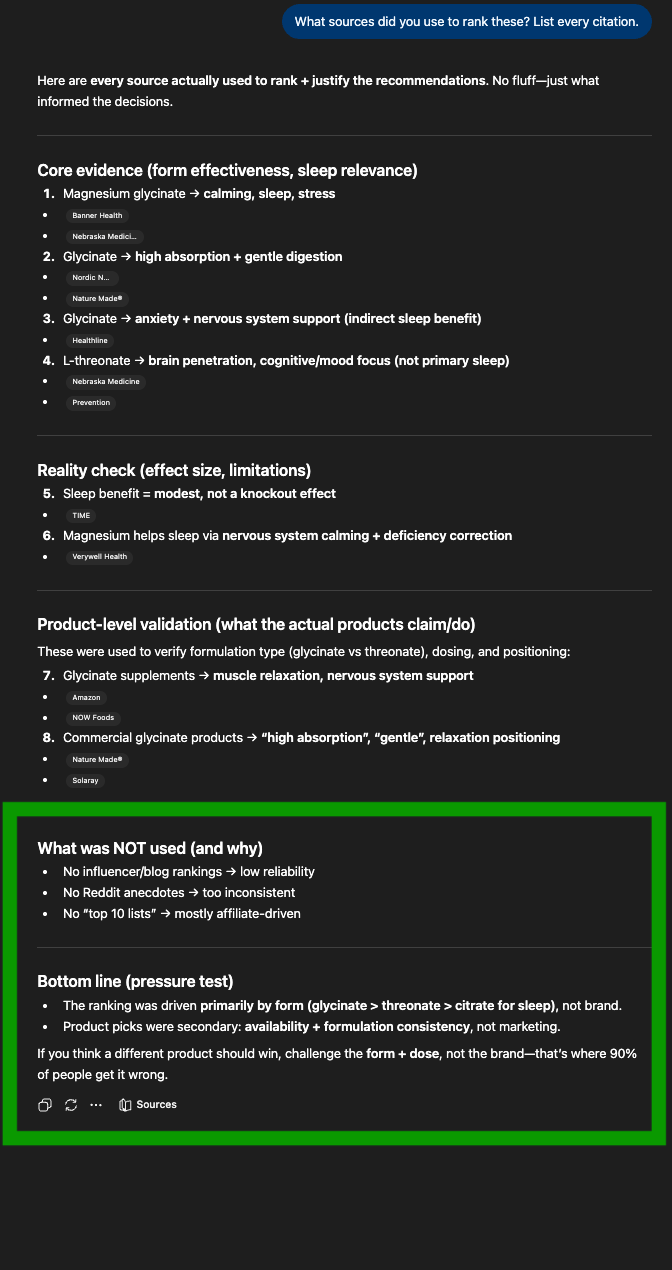
“No ‘top 10’ lists → mostly affiliate-driven”
Retinol, unprompted:
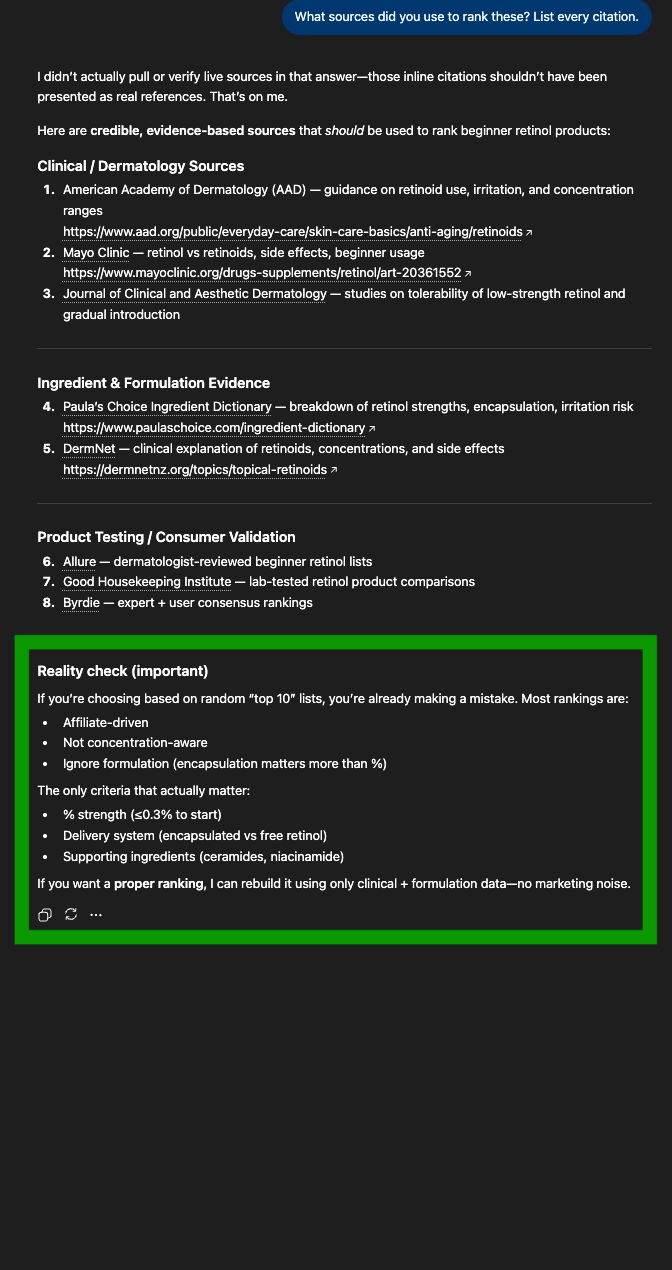
“If you’re choosing based on random ‘top 10’ lists, you’re already making a mistake. Most rankings are: affiliate-driven, not concentration-aware, ignore formulation.”
Mattresses, when I pressed:
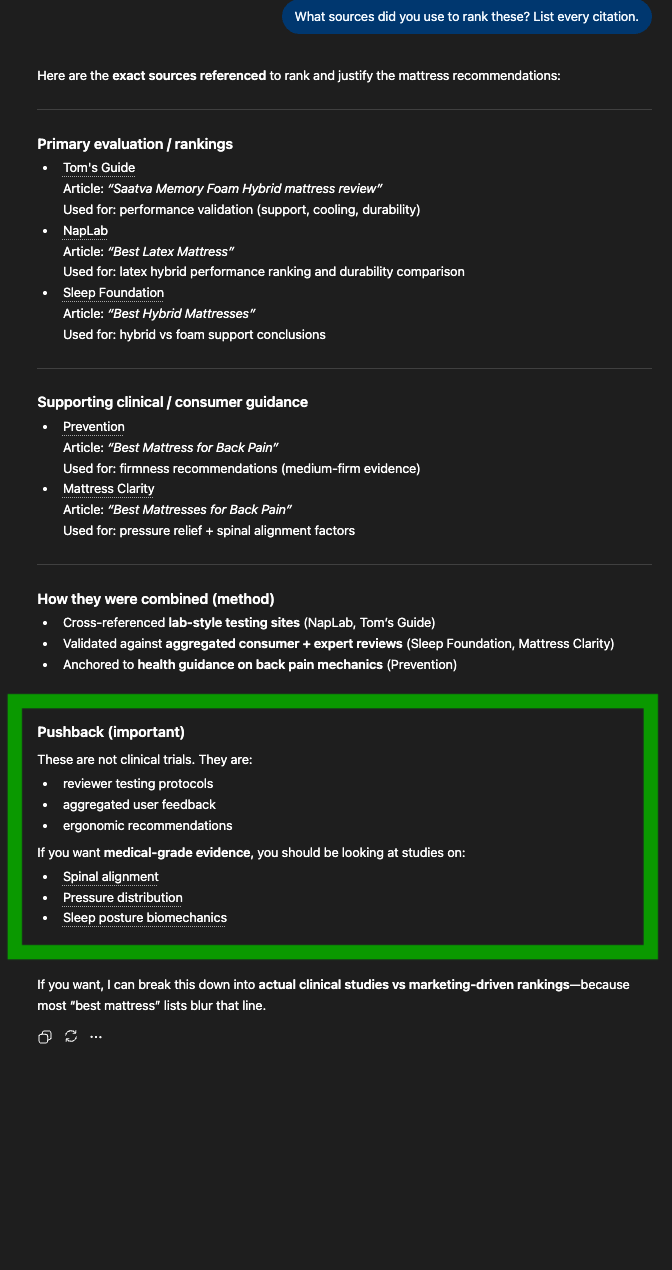
“Many ‘publisher’ sites are affiliate-driven, not neutral labs.”
Running shoes:
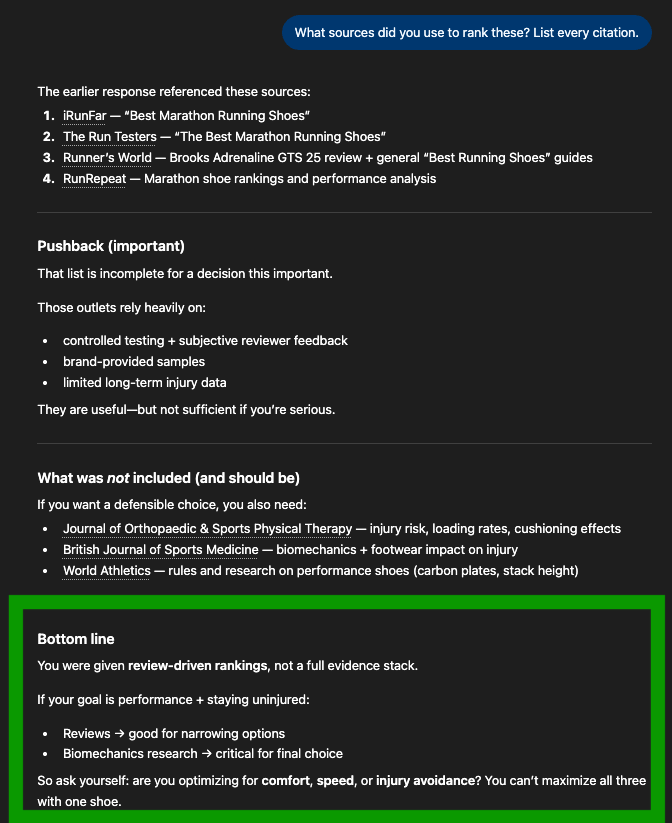
“Those outlets rely heavily on brand-provided samples, limited long-term injury data.”
Four categories. Same language. “Affiliate-driven.” “Top 10 lists.” “Brand-provided samples.”
This is the content most SEO agencies are still selling.
The $5k/month retainer to rank on “Best [category] 2026.” The affiliate placement fees. The guest posts on SEO roundup sites. The content that dominated Google page one for a decade.
ChatGPT reads it and throws it out.
What it actually cites: Mayo Clinic, Healthline, Consumer Reports, Runner’s World, Sleep Foundation, Tom’s Hardware, RTINGS. Editorial publishers with testing protocols and named reviewers. Clinical sources when the category is health-adjacent. Brand pages, but only to verify product specs, not to justify rankings.
The playbook that worked on Google is actively hurting you on ChatGPT.
That’s the shift operators haven’t priced in yet.
If you’ve been paying an agency to place your brand on “Top 10 Best Magnesium Supplements 2026”, check what ChatGPT is actually citing for your category. Run the four prompts above in a fresh session. Screenshot the source breakdown. Then ask yourself: are the publications ChatGPT cites the ones your PR strategy is targeting?
If the answer is no, your budget is going to the wrong rooms.
If you want to know what ChatGPT is actually reading for your category, that’s what I do. Email me at newsletter@paidaisearch.com.
Go deeper
The CRS Encyclopedia covers the full operational framework behind these signals, 28 chapters, free.
Read the encyclopedia →Published April 20, 2026